
Korea on Stage in New York: Wishes in Motion
Presented by Korea Heritage Service, Korea Heritage Agency and Korean Cultural Center New York
Thursday, February 12, 2026, 7:30 PM
Friday, February 13, 2026, 7:30 PM
Saturday, February 14, 2026, 3:00 PM
Venue: Korean Cultural Center New York
(122 E 32nd Street, New York, NY 10016)
Admission: FREE (Pre-registration is Required)
* RSVP and seating are on a first-come, first-served basis.
* Limited same-day standby tickets available.
* Cancellations must be made at least 48 hours in advance.
Please note: After three no-shows without notice, you may be subject to restrictions on future reservations.
A celebration of Seollal, Korea’s Lunar New Year, held in New York to welcome the new year.
Guided by moonlight—the traditional object of wishes in Korean culture—the audience is invited into a world of traditional dance and music.
From the first day of the New Year to the night when the first full moon rises, the journey of moonlight unfolds through court dances, folk dances, and folk songs imbued with wishes for peace and harmony. Together, we extend our wishes for blessings and open the beginning of a new year.
◆ PROGRAM
01. Light of dawn
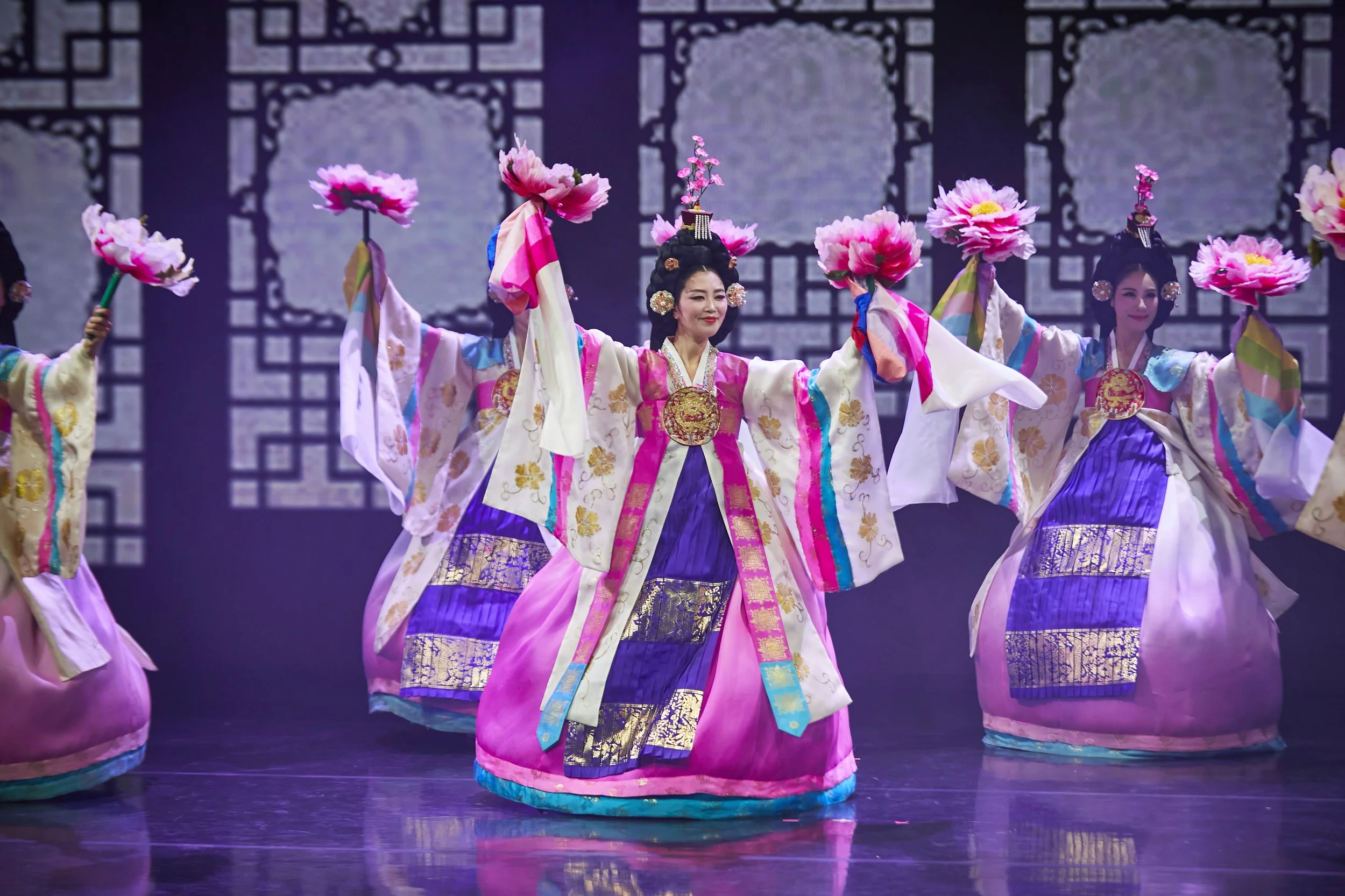
“On a winter night where moonlight lies hidden, women holding flowers dream of an abundant beginning.”
A welcoming dance that invites New York audiences into the world of Korean traditional culture to celebrate the New Year. Drawing on the court dance Gainjeonmokdan, performed while circling peonies that symbolize wealth and honor, and the form of Taepyeongmu, which expresses wishes for peace, this work is newly created as a ritual dance (uishikmu).
02. Cheoyongmu (Dance of Cheoyong; Designated as a UNESCO Intangible Cultural Heritage of Humanity in 2009)
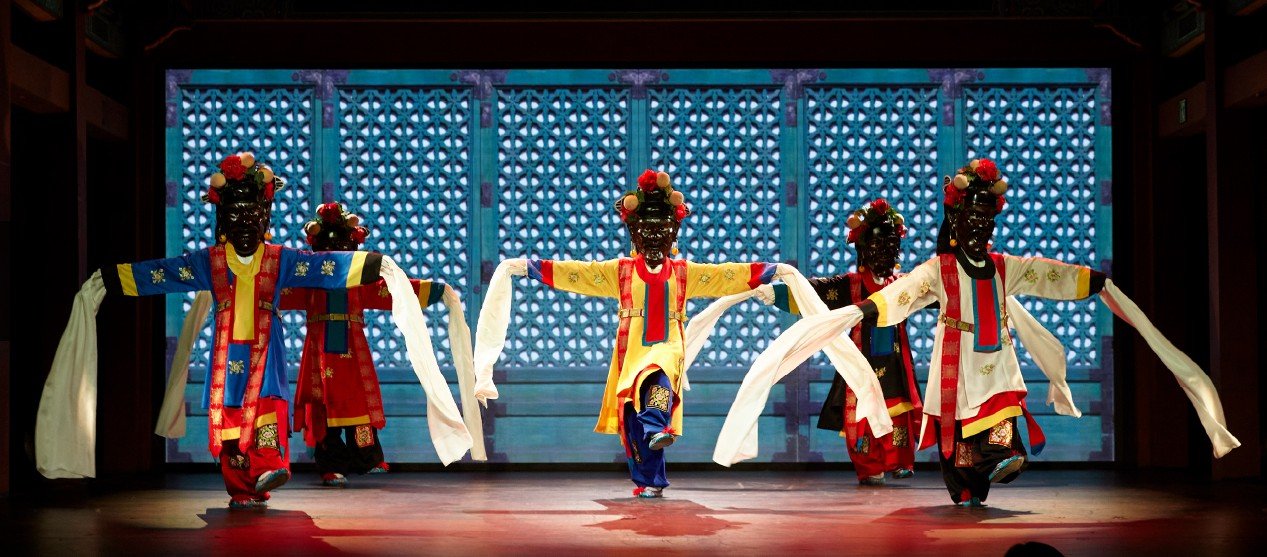
“Beneath the crescent moon of hope, negative energies are warded off as a new year begins.”
Cheoyongmu is a court dance that dates back to the late ninth century. It originates from a Silla-era legend in which Cheoyong, the son of the Dragon King of the East Sea, wards off a malevolent spirit that spreads disease through song and dance. This dance was traditionally performed during the Narye, a state ritual held on the last day of the year to ward off negative energies and evil spirits.
03. Pansori Heungboga: “The Gourd-Cutting Scene”
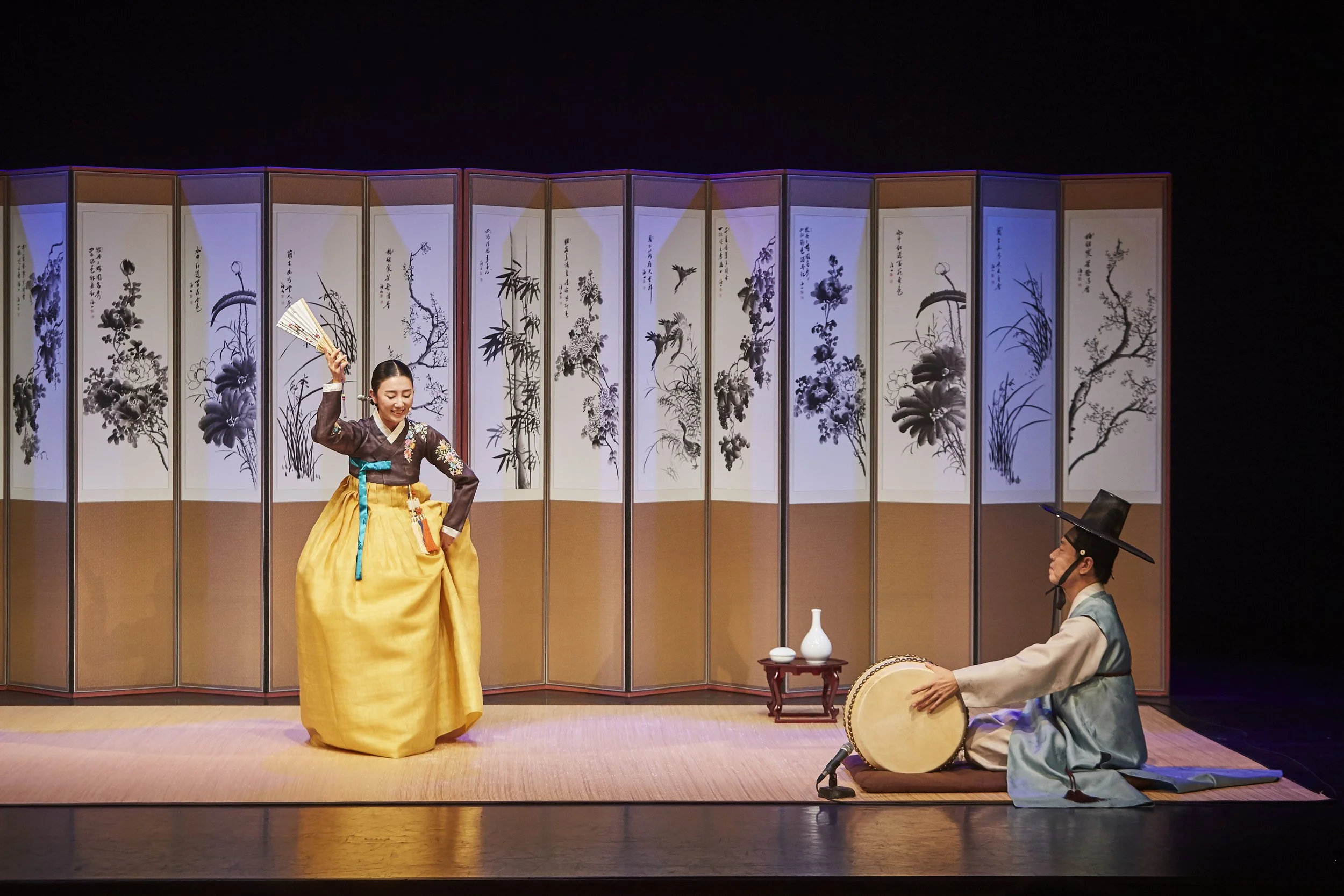
“A lively pansori performance in which a gourd is cut open with hope, making wishes for good fortune.”
Pansori is one of Korea’s most representative traditional performing arts, originating in the late 17th century and continuing to be performed today. It was inscribed on the UNESCO Representative List of the Intangible Cultural Heritage of Humanity in 2008. A single vocalist (sorikkun) weaves a long narrative by combining chang (song), aniri (spoken narration), and neoreumsae (expressive gestures), accompanied by the rhythmic drumming of a gosu.
▪ Sorikkun (vocalist) : Seo Jin-sil
▪ Gosu (drummer) : Oh Dan-hae
04. Taepyeongmu (Dance of Peace)
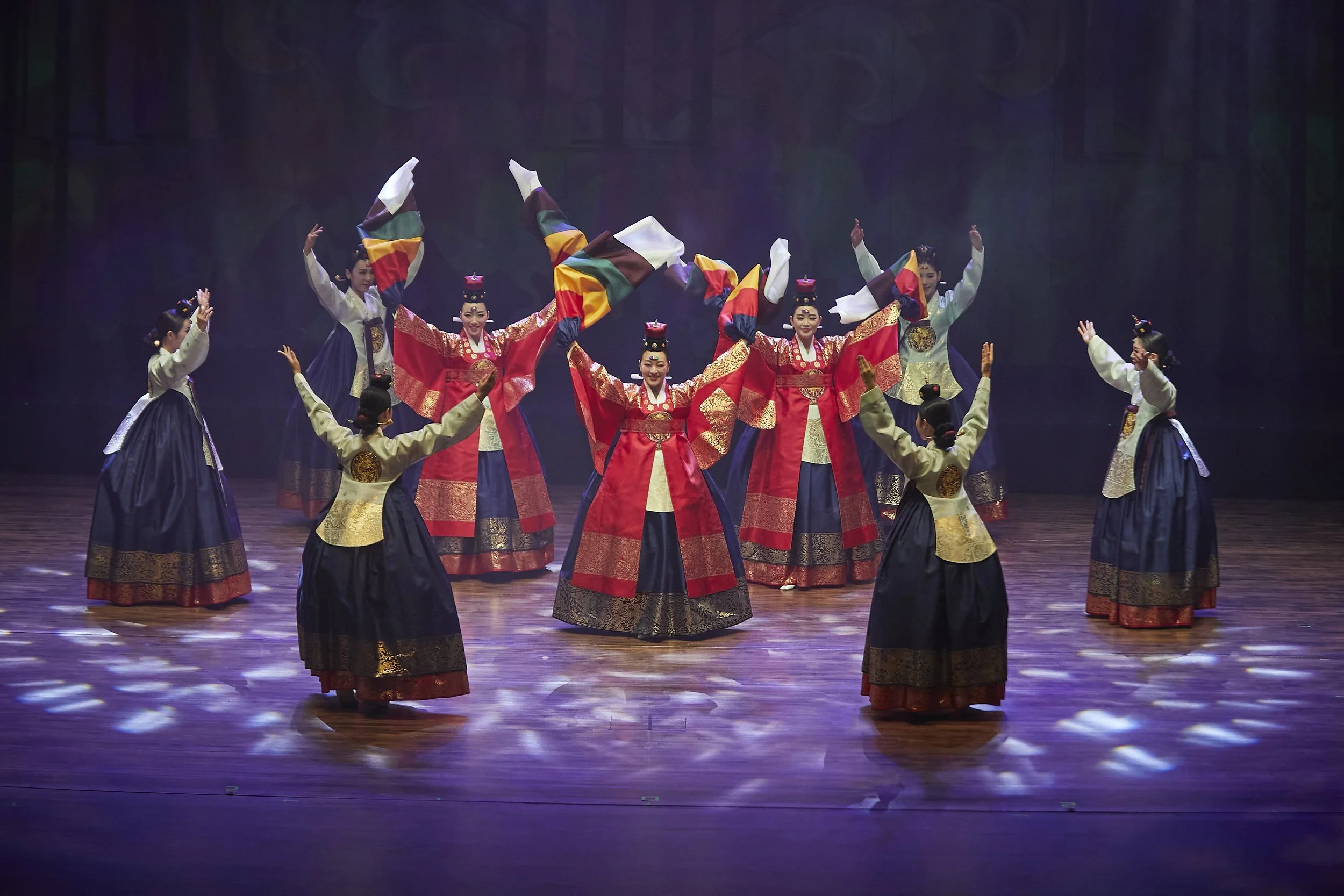
“Through the queen’s graceful movements, a wish is made for an era of peace.”
Taepyeongmu is a folk dance systematized in the early 20th century and designated as a National Intangible Cultural Heritage of Korea in 1988. The dance conveys the idea that the king and queen themselves perform in order to pray for the prosperity of the royal court and an age of national peace and stability. Characterized by delicate and elegant movements and refined, technically intricate footwork, Taepyeongmu is reconfigured in today’s performance as a group dance.
05. Namdo Sogochum
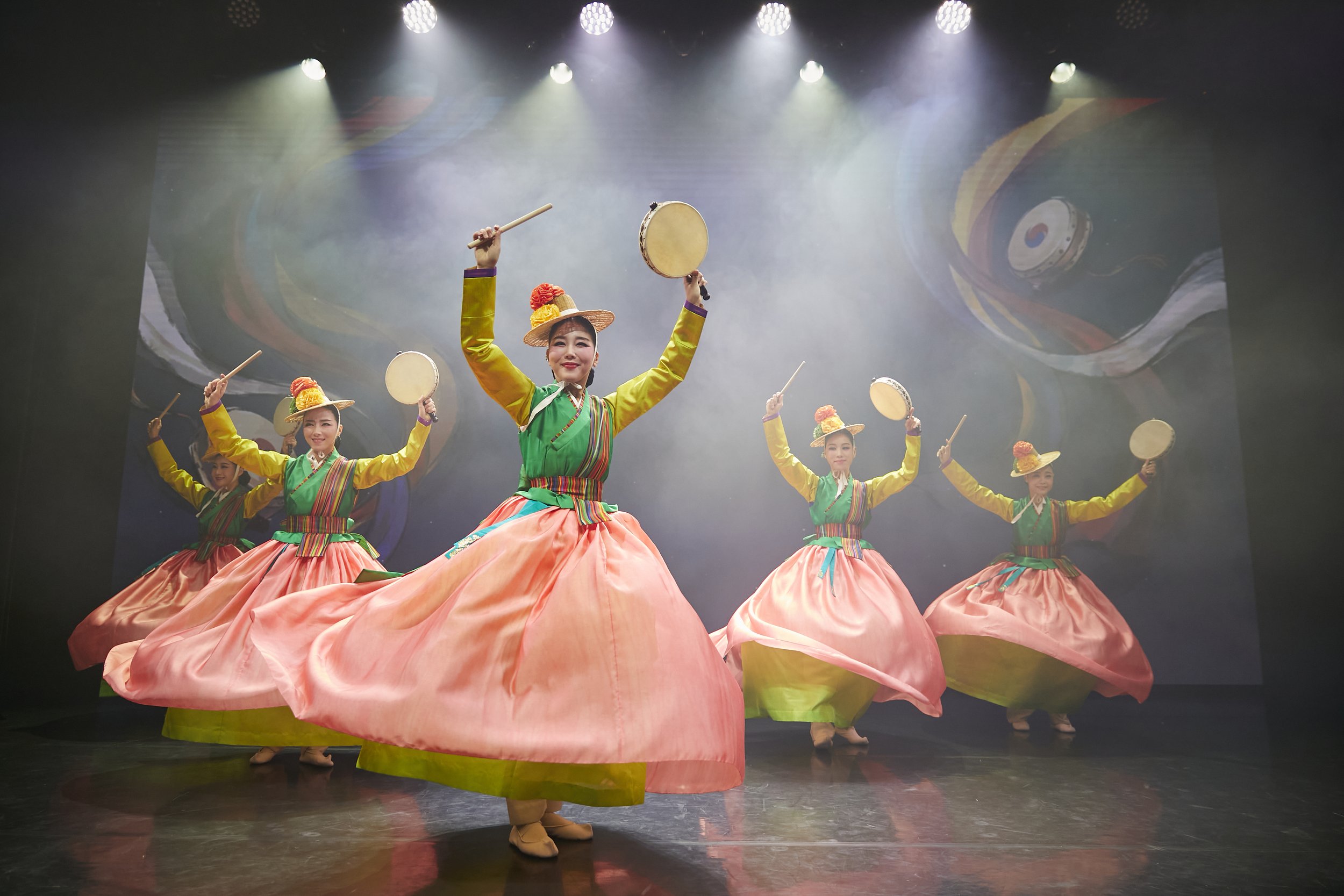
“A communal dance that brings people together in harmony, making wishes for a bountiful harvest.”
The dance is performed to Namdo hojeok sinawi, led by the taepyeongso (Korean oboe), a traditional folk wind instrument, and structured around pungmul rhythms rich in tempo changes, including jajinmori, gutgeori, dongsalpuri, and hwimori. Through the harmony of dance, song, and instrumental music, the performance creates a festive and exhilarating spectacle.
06. Redrawing the Circle (Contemporary Dance)
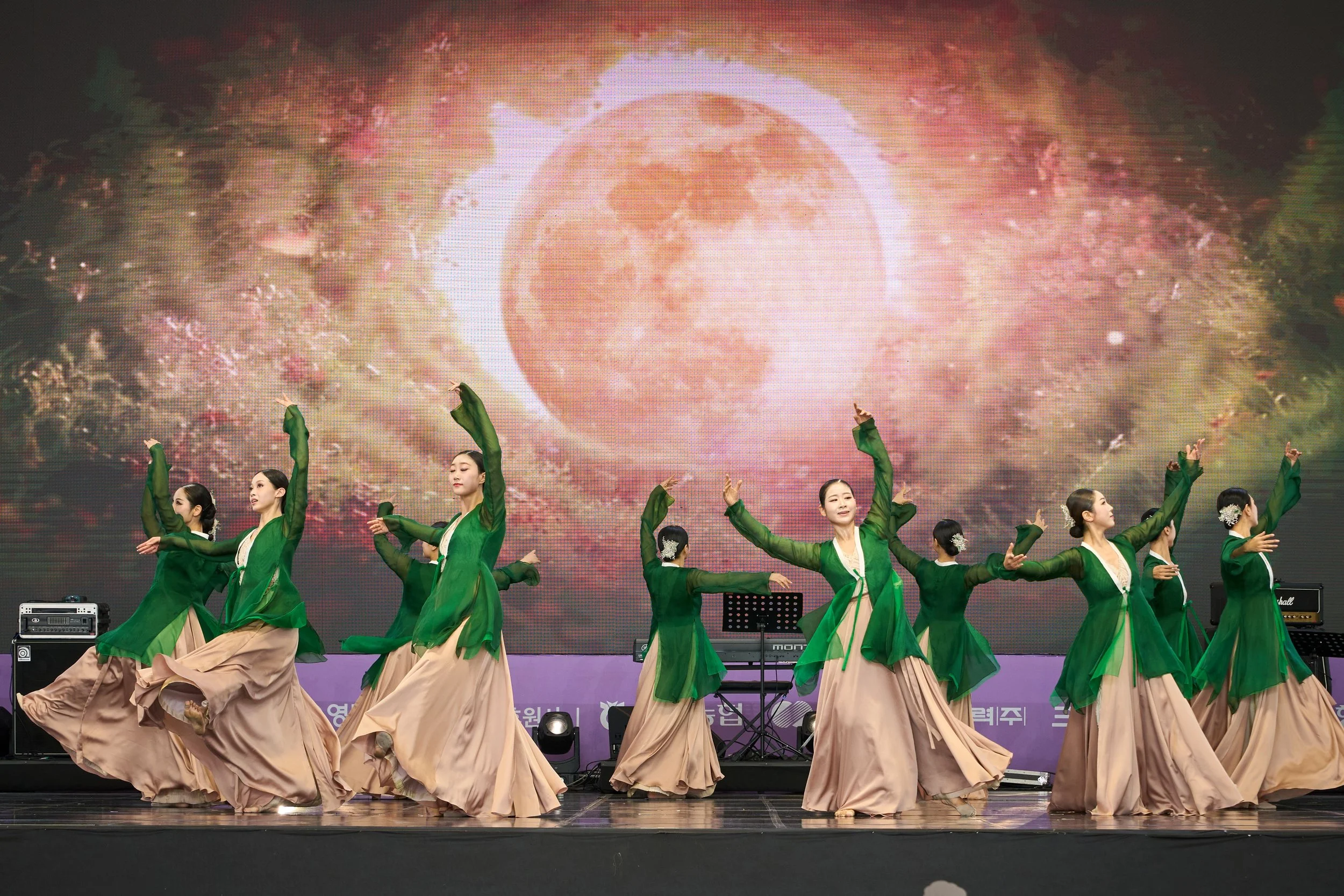
“The circle of Ganggangsullae —its wishes and aspirations— drawn anew.”
Reimagining the distinctive appeal of Ganggangsullae, which embodies communal spirit, abundance, love, and aspirations for life, this work is recreated through a contemporary sensibility. Ganggangsullae is a form of folk culture that combines song, dance, and play into an integrated performing art, and was inscribed on the UNESCO Intangible Cultural Heritage of Humanity list in 2009. It originated from a custom in which village women gathered under the bright full moon, joined hands to form a circle, and circled together as they prayed for abundant harvests and prosperity.
07. Jindo-bukchum
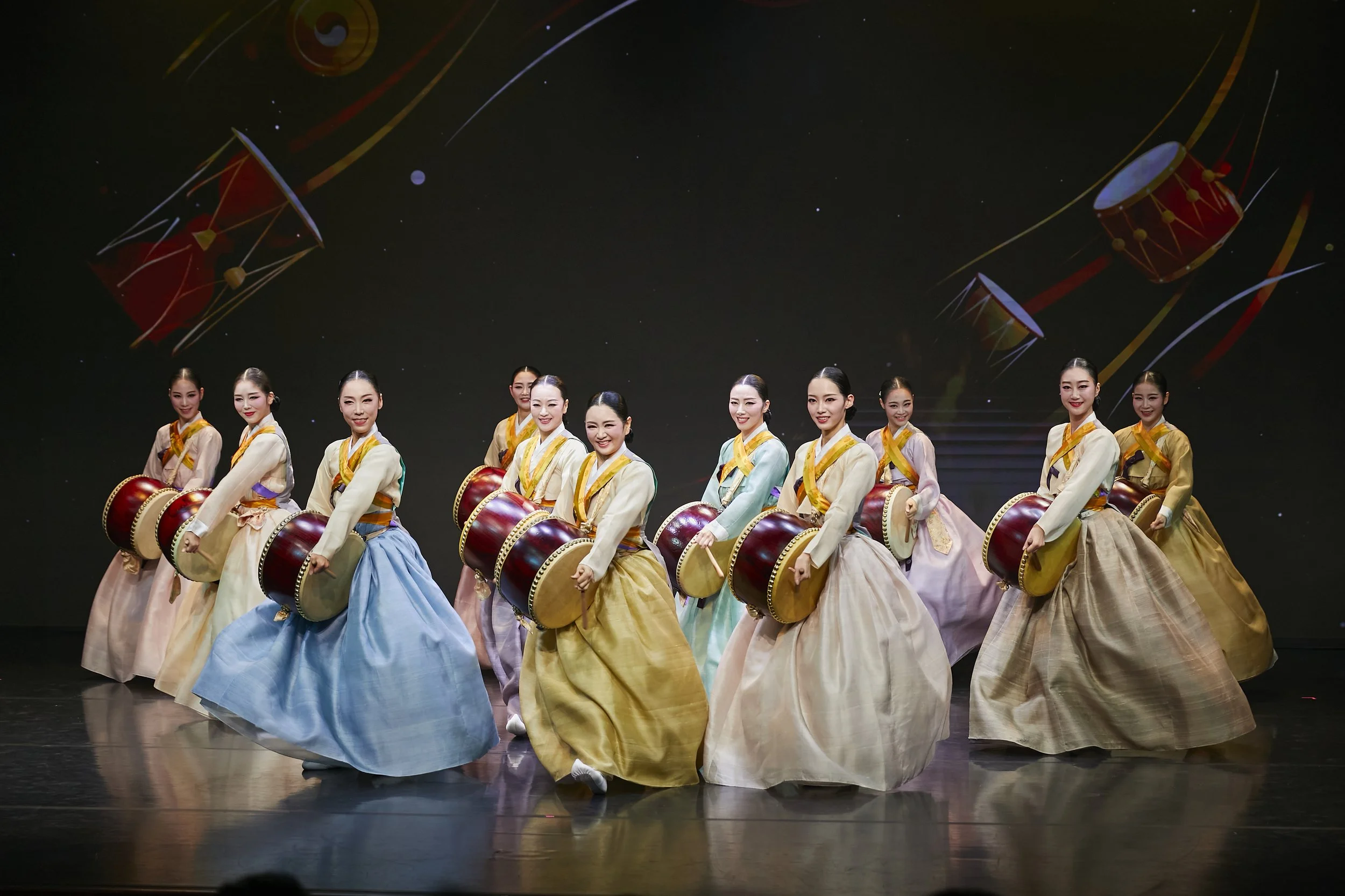
“Dynamic power and refined movements ignite a shared sense of exhilaration.”
Jindo-bukchum is a dance (chum) performed while carrying a drum (buk) on the shoulder and playing rhythmic patterns with drumsticks held in both hands. It is known to have originated from mobuk, a custom in Jindo, Jeollanam-do—Korea’s southern region—in which drums were played during rice planting to raise spirits and maintain rhythm, as well as from seolbuk nori, a solo performance from pungmul pangut.
◆ The Korea Heritage Service
The Korea Heritage Service is a government agency dedicated to protecting and passing on the Republic of Korea’s precious history and heritage. It systematically safeguards and researches tangible heritage—such as royal palaces, Buddhist temples, and historic sites—as well as intangible heritage, including traditional crafts, rituals, and performances, along with Korea’s beautiful natural heritage. The agency also works to convey the value of Korea’s national heritage to future generations, sharing the significance of diversity beyond the boundaries of past and present, and of Korea and the wider world.
◆ The Korea Heritage Agency
The Korea Heritage Agency is a public institution that helps Korea’s heritage live and breathe in contemporary life. Through a wide range of events and exhibitions utilizing national heritage, as well as the development of cultural products, the agency introduces Korea’s history and traditions in an accessible and engaging way. It also supports international exchange and educational programs, enabling international audiences and younger generations to directly experience and understand Korean cultural heritage, while connecting its value to everyday life and the future.
◆ Visit Korean Heritage Campaign
The Korea Heritage Service and the Korea Heritage Agency jointly carry out the Visit Korean Heritage Campaign to introduce Korea’s national heritage to the world. The campaign offers a range of initiatives, including National Heritage Visit Routes, curated around World Heritage and Intangible Cultural Heritage of Humanity; the World Heritage Festival, which presents diverse programs utilizing UNESCO World Heritage sites; and National Heritage Media Art, which brings the stories of national heritage to life through a variety of digital technologies. Going beyond simply viewing heritage sites, the Visit Korean Heritage Campaign offers the gift of living history. Join the campaign and begin a more accessible and engaging journey through Korea’s national heritage.